
Roofing
Your roof: when it pays to upgrade and when it doesn’t.
The roof is the structure that holds any solar system and what protects your home in hurricane season. Installing panels on a roof that needs replacing in 3 years means paying twice.
- 5.00 ★ on Google · 97 reviews
- Access to the whole market
- English and Spanish
- Florida homeowners
The uncomfortable truth
Many solar proposals ignore the roof because it complicates the sale. We check it first: if it needs replacement, we tell you and show you how to combine it, or how to postpone solar.
What we check
What we look at in your home
01
Age and material
Shingle, tile and metal age differently under Florida sun and rain. Remaining life decides everything.
02
Actual condition
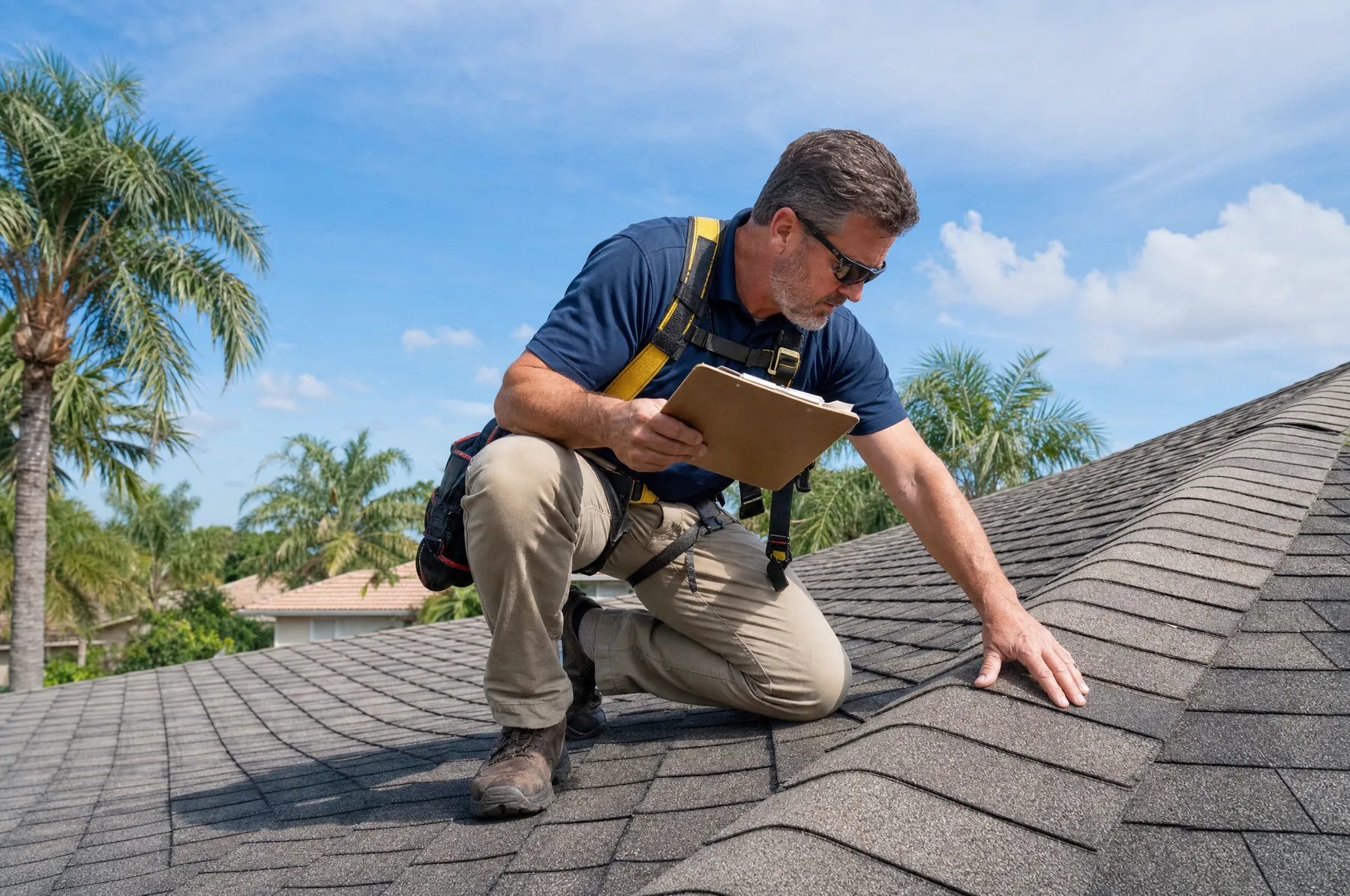
Lifted shingles, leaks, ventilation. What an inspector sees and a satellite photo doesn’t.
03
Solar compatibility
Which materials complicate installation and what happens to the roof warranty when it is penetrated.
04
Programs and insurance
Wind mitigation inspections and state programs that can lower your insurance premium.
When it makes sense
- Your roof is 15+ years old or has visible damage
- You are evaluating solar: the roof is checked first
- You want to lower your insurance premium with wind mitigation
When it doesn’t
- Recent roof in good condition
- You only need a spot repair
- Today’s budget covers one thing: we help you prioritize
How we solve it
From diagnosis to result
Roof review
With your information and, when needed, a physical inspection by a partner.
Recommendation
Repair, replace, combine with solar or wait. In the right order.
Verified partner
When there is a match, we connect you with a roofing contractor with a track record.
Lifespan in Florida
The Florida sun shortens your roof’s life
The material decides almost everything. Here is the national reference next to what Florida roofers report, and what fails first in each case.
| Lifespan in Florida | National (InterNACHI) | In Florida | What fails first |
|---|---|---|---|
| 3-tab asphalt shingle | 20 years | 12-15 years | Granule loss, lifted edges |
| Architectural asphalt shingle | 30 years | 15-20 years (premium up to 20-25) | Granules, tab sealant |
| Clay / concrete tile | 100+ years (the tile) | 40-50 years; underlayment 20-25 | The membrane under the tile, not the tile |
| Metal (standing seam) | 40-80 years | 40-70 years | Fasteners and seals; the panel almost never |
| Exposed-fastener metal | 40-80 years | 30-45 years | Screw washers |
| Membrane (flat roof) | 20 years | Shorter in direct sun | Seams and ponding |
National reference: InterNACHI. Florida ranges: local roofers (Coastal Roofing of South Florida). Your roof can last more or less depending on installation, ventilation and maintenance.
The 15-year rule
15 years
The clock your insurer runs
At 15 years or older, your insurer can require a roof inspection; with under 5 years of useful life left, it can decline to renew the policy. That is why we check the roof’s age before any solar project.
Florida Statutes 627.7011
Learn
Guides on this topic
Roof before solar: when to replace it first (Florida 2026)
Panels last 20-30 years; if your asphalt shingle roof is over 10, replace it first. What it costs to remove and reinstall panels, and how Florida's 15-year insurance rule weighs in.
7 min read
Florida roof programs: My Safe Florida Home and insurance discounts (2026)
What My Safe Florida Home provides (free inspection and a grant up to $10,000 with a 2-to-1 match), who qualifies under the law, how funding works, and what discounts the law requires insurers to give.
7 min read
How long a roof lasts in Florida: asphalt shingle, tile and metal
Lifespan of each roof type in Florida's climate, why asphalt shingles last less here than elsewhere, the signs a roof is ending, and what the 15-year law says.
6 min read
Frequently asked questions
Can panels go on tile or metal?
What happens to the panels if the roof needs replacing later?
Is there roof assistance in Florida?
Free · No pressure · 15 minutes
What about your home?
We look at the real numbers of your home and tell you what makes sense, and what doesn’t. You leave the conversation knowing what to do, whether you move forward or not.