
Batteries and backup
Solar battery vs generator in Florida in 2026: cost, fuel, noise and which one fits you
Honest battery vs generator comparison for Florida outages: installed price, fuel, noise, maintenance, runtime, permits and resale. Neither one always wins.
Written by Lazaro Diaz Hernandez · Founder, E-Minded SolutionsUpdated 7 min read
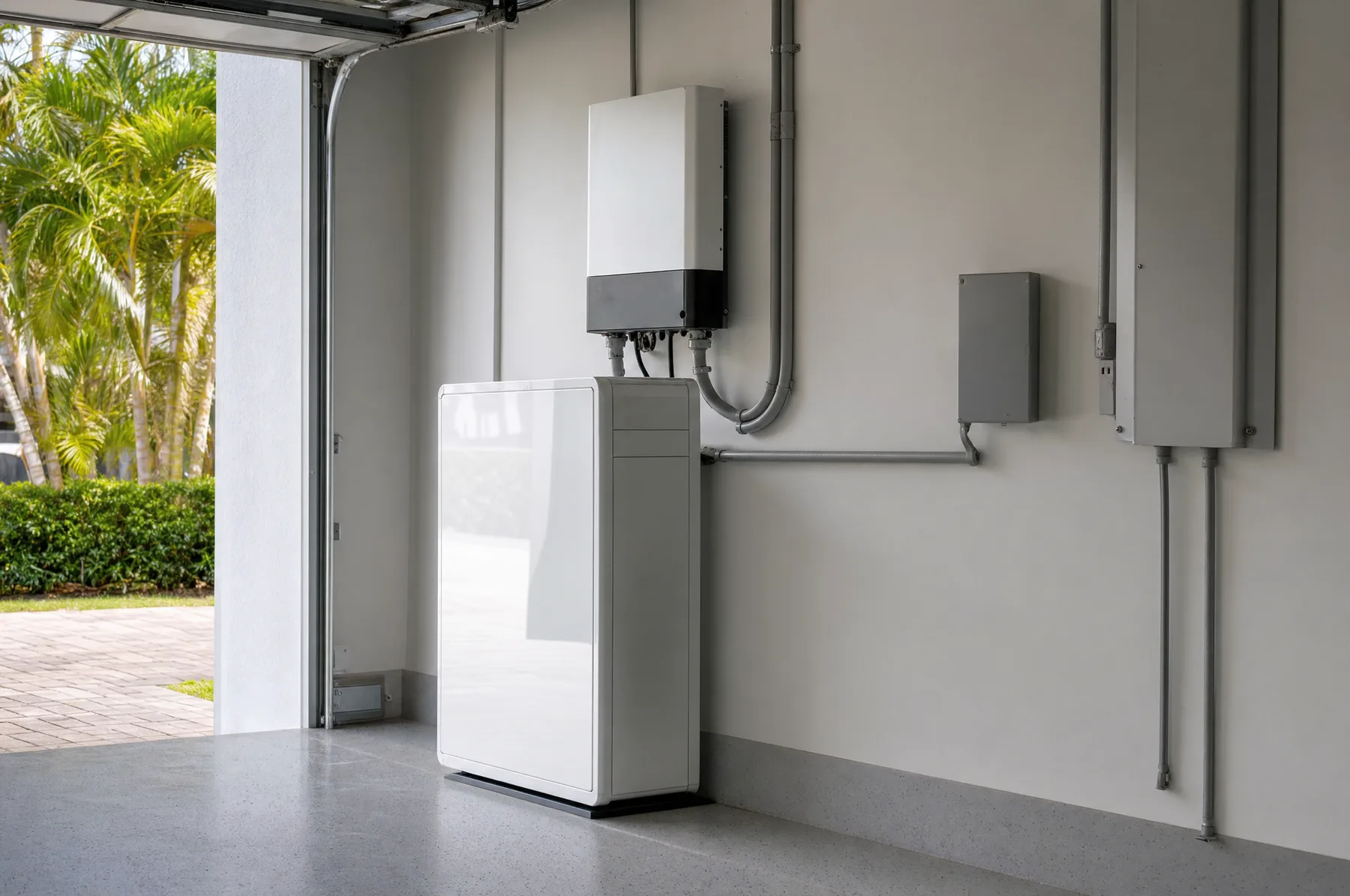
Neither one always wins. A standby generator can cost less to buy and runs as long as there is gas, but it is loud, needs maintenance and produces carbon monoxide. A solar battery costs more upfront, is silent and recharges from the sun, but it has a kWh limit and will not carry central A/C for days. The answer depends on what you want to keep running, for how long, and whether you already have panels.
The full table
| Criterion | Solar battery (13.5 kWh) | Gas standby generator |
|---|---|---|
| Installed cost | $15,300-$16,200 (Powerwall 3) before incentives, per SolarReviews | $9,000-$20,000 for 14-26 kW per HomeGuide |
| Fuel | $0; recharges from panels | You pay for every hour of use, on propane or natural gas; depends on hours and gas prices |
| Noise | Silent (Enphase 5P: under 30 dBA at 1 m) | Combustion engine: the neighborhood hears it when it runs |
| Maintenance | No moving parts, no periodic service | Oil, filters, test runs and annual service |
| Runtime | Limited by kWh and by the next day’s sun | As long as there is gas; with a natural gas line, indefinite |
| Emissions at home | None | Carbon monoxide; ~85 deaths/year in the U.S. per CPSC |
| Permits | Electrical permit and inspection in your county | Electrical and gas; outdoor placement with clearances from windows |
| Lifespan | 10- to 15-year warranties with a minimum capacity at the end | Depends on hours of use and upkeep |
| Resale | No solid data; buyers value the backup, not the equipment | No solid data; same |
The price figures are national averages from cost guides and manufacturer quotes, not the price at your specific home. In Florida the county permit, the electrical panel and the distance to the garage or gas meter change the number. And a battery bought in 2026 comes with no federal credit.
What does each one cost over 20 years?
Long-term comparisons usually look like this. On the generator side: the purchase, annual service, fuel for every hour of use and, over the years, a possible replacement. On the battery side: no fuel or maintenance, with a 10- to 15-year warranty. The generator’s real cost depends on how many hours you run it and on propane or gas prices; ask for the math with your usage, not an average.
What those comparisons often hide is that they pair the battery with a full solar system. The battery does not win on its own; it wins because the panels recharge it for free. If you do not have panels and do not plan to, the battery charges from the grid, and in a long outage it runs down with no way to refill.
Heads up: the “battery burns no fuel” argument is true and misleading at the same time. A generator on a natural gas line runs five straight days with central A/C; a 13.5 kWh battery does not. If your nightmare scenario is a week without power in September with an elderly relative at home, the generator (or both) is the serious answer, even if the paper says the battery is cheaper over the long run.
Noise, maintenance and the risk you cannot see
A battery has no engine. Enphase specifies under 30 dBA at one meter for its IQ Battery 5P; a generator carries a combustion engine, and you hear it. After a hurricane, generator noise across the neighborhood is part of the landscape, and so are the complaints.
Maintenance is the other difference. A generator needs oil, filters, test runs and annual service; neglect it and it will not start the day of the hurricane. A battery has no moving parts.
And the invisible risk: carbon monoxide. The CPSC estimates about 85 deaths a year in the U.S. from portable generators, and warned before Ian that the gas can kill in minutes. In just the two weeks after Ian, the Florida Department of Health confirmed at least 41 poisoning cases, per the Tampa Bay Times. Almost all from placing the generator in the garage or near a window. A fixed standby generator, installed outdoors with proper clearances, reduces that risk; a badly placed portable creates it.
Which fits your scenario?
Fridge, wifi, lights and one room with A/C for hours, several times a year: battery. Silent, automatic, no fuel to line up for, and it recharges if the sun comes out. We size it in hurricane and outage backup.
Central A/C for the whole house for days on end, once every few years: gas standby generator. The battery does not handle that profile without multiplying units.
A medical need that cannot fail: battery for the critical hours and generator as a second layer. It is the only combination that depends on neither sun nor gas.
Tight budget and one short outage every few years: a portable generator used properly, outdoors and away from windows, for the fridge and a few fans. With the CPSC warning in hand.
When it is NOT worth it
- Battery without panels: it charges from the grid and has no way to refill during a long outage. If you are not going solar, compare generators only.
- Generator for someone who will not maintain it: the hurricane will come and it will not start. Be honest with yourself.
- Battery as “savings”: with 1-to-1 net metering it does not save, as we explain in do I need a battery with net metering?.
- Generator in a home with close neighbors and strict HOA rules: check noise and placement restrictions before buying.
What to check before you decide
- Your real scenario: what you want on, for how many hours and how often. Write it down before requesting quotes.
- Whether you have or will have panels. It changes the whole battery equation.
- Whether you have a natural gas line or depend on propane tanks that also run out.
- The installed cost with your county’s permits, not the equipment price.
- How long each option lasts and what warranty it carries; for the battery, we explain it in how long solar batteries last.
Frequently asked questions
Which is cheaper, battery or generator?
Can I have both a battery and a generator?
Isn't a portable generator enough?
Figures vary by home, usage and bill. Incentives vary by county, income and installation type. Confirm any tax matter with your tax preparer.
Sources
- SolarReviews — Tesla Powerwall 3: cost and review (2026)
- HomeGuide — How Much Does a Whole House Generator Cost (2026)
- Enphase — IQ Battery 5P Data Sheet
- Tesla — Powerwall Limited Warranty (USA)
- CPSC — Carbon Monoxide from Generators Can Kill in Minutes (Hurricane Ian warning)
- Tampa Bay Times — Hurricane Ian: at least 41 carbon monoxide poisoning cases confirmed
Keep learning
Batteries and backup
Do I need a battery if I have net metering in Florida? The honest answer for 2026
With 1-to-1 net metering at FPL, Duke and TECO, a battery does not lower your bill: it is for backup. When it does pay: time-of-use rates, frequent outages, medical needs.
6 min read
Batteries and backup
Home solar batteries in Florida in 2026: what they do, what they cost, and when you don't need one
How a solar battery works, the difference between kWh and kW, what one costs installed, and why with 1-to-1 net metering in Florida it is for backup, not savings.
7 min read
Batteries and backup
How long do solar batteries last? Cycles, warranties and why Florida heat matters (2026)
What a cycle is, what Tesla (10 years, 70%) and Enphase (15 years or 6,000 cycles, 60%) guarantee, how a battery degrades, and the difference between LFP and NMC chemistry.
6 min read
Free · No pressure · 15 minutes
What about your home?
We look at the real numbers of your home and tell you what makes sense, and what doesn’t. You leave the conversation knowing what to do, whether you move forward or not.